HS Code Explained: How to Find the Correct HS Code for Import in India

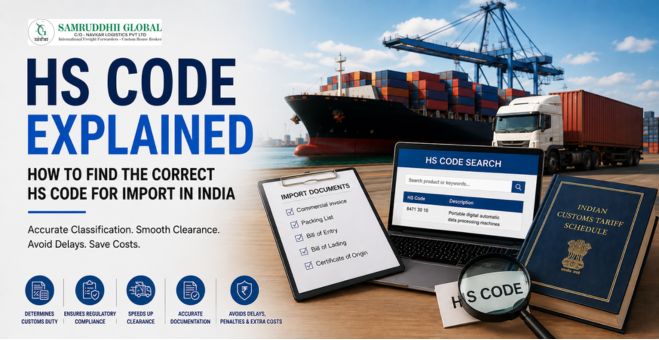
Importing goods into India involves much more than arranging shipping and submitting customs documents. One of the most important steps in the entire import process is selecting the correct HS Code for Import. A single incorrect code can result in customs delays, incorrect duty payments, penalties, shipment examinations, or even disputes with customs authorities.
Whether you’re importing machinery, electronics, chemicals, textiles, medical equipment, or consumer goods, the HS Code determines how your products are classified by customs. It directly affects the customs duty, applicable taxes, import regulations, licensing requirements, and documentation needed for clearance.
Many first-time importers assume that an HS Code is just another number on an invoice. In reality, it is a globally recognized product classification system used by customs authorities in more than 200 countries. Choosing the right Customs HS Code ensures that your shipment complies with Indian customs regulations and moves through the clearance process more efficiently.
What Is an HS Code?
An HS Code (Harmonized System Code) is an internationally standardized numerical system used to classify goods traded across international borders. It was developed by the World Customs Organization (WCO) to create a common language for customs authorities, importers, exporters, freight forwarders, and logistics providers worldwide.
Every product imported or exported is assigned an HS Code based on its nature, composition, intended use, and other classification rules. Customs authorities use this code to identify products consistently, regardless of the country involved in the trade.
For example, products such as mobile phones, industrial machinery, pharmaceutical ingredients, textiles, furniture, and automotive parts all have their own unique HS Codes.
In India, customs authorities use these codes to:
- Calculate customs duty and taxes
- Determine import policy requirements
- Verify import restrictions
- Apply anti-dumping or safeguard duties (where applicable)
- Check compliance with government regulations
- Process customs clearance efficiently
Without the correct HS Code for Imported Goods, customs officials cannot accurately determine how a shipment should be treated under Indian customs laws.
Why Is the Correct HS Code for Import So Important?
Selecting the correct HS Code for Import is not simply a documentation requirement—it plays a critical role in the entire customs clearance process.
1. Determines Customs Duty
The applicable customs duty depends on the product’s classification. Two products that appear similar may have completely different duty rates because they fall under different HS Codes.
Using the wrong code could result in:
- Overpaying customs duty
- Underpaying duty
- Additional assessments
- Interest and penalties
2. Helps Ensure Regulatory Compliance
Certain products require approvals or certifications before they can be imported into India.
Examples include:
- BIS certification
- FSSAI approval
- CDSCO registration
- Plant quarantine clearance
- Animal quarantine requirements
- DGFT authorizations
The applicable regulations are often linked to the product’s Customs HS Code.
3. Speeds Up Customs Clearance
Accurate product classification allows customs officers to verify shipments more efficiently. Selecting the right HS Code is essential, as classification errors can trigger customs assessments, additional paperwork, and inspection procedures that slow down shipment release.
Businesses that consistently classify products correctly are also less likely to face repeated customs queries.
4. Supports Accurate Trade Documentation
The HS Code appears on several important import documents, including:
- Commercial Invoice
- Bill of Entry
- Shipping Bill
- Bill of Lading
- Packing List
- Certificate of Origin (in many cases)
Consistency across these documents helps reduce discrepancies during customs processing.
5. Prevents Costly Mistakes
An incorrect HS Code can lead to unexpected costs such as:
- Customs reassessment
- Storage charges
- Demurrage
- Detention charges
- Shipment delays
- Additional inspections
- Penalties for misclassification
For businesses importing regularly, these avoidable costs can significantly affect overall profitability.
Who Uses HS Codes?
The HS Code is used by multiple stakeholders involved in international trade. It ensures that everyone refers to the same product classification, reducing confusion across different countries and supply chains.
The following organizations and professionals rely on HS Codes every day:
| User | Purpose |
| Importers | Product classification and customs compliance |
| Exporters | International trade documentation |
| Customs Authorities | Duty calculation and regulatory enforcement |
| Freight Forwarders | Shipping documentation and cargo handling |
| Customs Brokers & CHAs | Customs clearance and product declaration |
| Government Agencies | Trade statistics and import policy implementation |
| Manufacturers | Product classification for global trade |
Because the HS Code is recognized internationally, it provides a standardized framework for identifying products across different markets.
How Does the HS Code System Work?
The Harmonized System follows a structured classification hierarchy that groups products based on their characteristics. Each product is assigned a numerical code that becomes more specific as additional digits are added.
At the international level, the first six digits are standardized by the World Customs Organization. Individual countries may extend these codes with additional digits to meet their own customs and tariff requirements.
In India, imported products are generally classified using a more detailed tariff code under the Indian Customs Tariff Schedule. These additional digits help customs authorities identify products with greater precision for duty assessment and regulatory purposes.
For example, a broad product category such as electrical machinery is first identified at the chapter level. As more digits are added, the classification narrows down to a specific type of electrical product. This hierarchical structure helps customs authorities distinguish between products that may appear similar but are subject to different duty rates or import conditions.
Understanding this structure is essential because even a small difference in product specifications can result in a different HS Code for Import, which may change the applicable customs duty, documentation requirements, or import restrictions.
Structure of an HS Code
Understanding the structure of an HS Code is essential for selecting the correct HS Code for Import. Every digit has a specific meaning and helps customs authorities classify products accurately.
The Harmonized System follows a logical hierarchy, where the product classification becomes more specific as additional digits are added.
Basic Structure of an HS Code
| Digits | Description | Example |
| First 2 Digits | Chapter | 84 – Machinery & Mechanical Appliances |
| First 4 Digits | Heading | 8471 – Automatic Data Processing Machines |
| First 6 Digits | Subheading (International Standard) | 847130 – Portable Computers |
| Additional Digits (Country Specific) | National Tariff Classification | Used by individual countries such as India |
The first six digits are standardized globally by the World Customs Organization (WCO). This means that the product classification remains consistent across most countries participating in international trade.
India extends these classifications with additional digits in its Customs Tariff to provide more detailed product identification for customs duty, policy conditions, and regulatory compliance.
Example: A laptop imported into India shares the same first six HS Code digits internationally, while the extended tariff classification may vary depending on Indian customs requirements.
Common Mistakes Importers Make While Selecting an HS Code
Choosing the correct HS Code for Import may seem straightforward, but many importers make classification mistakes that lead to delays, additional costs, or customs disputes. In most cases, these errors occur because businesses rely on assumptions instead of understanding the product and applicable customs regulations.
Here are some of the most common mistakes to avoid.
1. Using the Supplier’s HS Code Without Verification
Many overseas suppliers mention an HS Code on the Commercial Invoice or Packing List. While this can be a useful reference, importers should not assume it is automatically valid for India.
Different countries may use additional tariff digits for national classification. A code used by the exporter may not always align with the Indian Customs Tariff or the specific import policy applicable in India.
Best Practice: Always verify the classification before filing the Bill of Entry.
2. Choosing an HS Code Based Only on the Product Name
A product name rarely provides enough information for accurate classification.
For example:
- Steel Pipe
- Industrial Steel Pipe
- Stainless Steel Pipe
- Pipe Fittings
Although these products sound similar, they may fall under different classifications depending on their material, dimensions, manufacturing process, and intended use.
Always consider the complete product specifications rather than relying solely on its name.
3. Ignoring Product Composition
Many products are made from multiple materials. Customs classification often depends on the material that gives the product its essential character.
Examples include:
- Plastic-coated metal products
- Composite furniture
- Multi-layer packaging
- Electronic equipment with integrated components
Ignoring material composition can result in selecting the wrong Customs HS Code.
4. Not Reviewing the Latest Customs Tariff
Import policies and tariff schedules are updated periodically. Using an outdated classification reference may lead to incorrect duty calculations or non-compliance.
Before importing, ensure that you are referring to the latest Indian Customs Tariff and any applicable notifications issued by the relevant authorities.
5. Copying a Competitor’s HS Code
Some businesses search online and use the HS Code mentioned by another importer without verifying whether the products are truly identical.
Even products that appear similar can have different classifications because of variations in:
- Technical specifications
- Capacity
- Material
- Manufacturing process
- End use
Copying another company’s classification without proper verification increases the risk of customs objections.
6. Overlooking Product End Use
The intended use of a product can significantly affect its classification.
For instance, a component designed exclusively for medical equipment may be classified differently from a similar-looking component used in industrial machinery.
Always identify how the product will be used before selecting an HS Code for Imported Goods.
What Happens If You Use the Wrong HS Code?
An incorrect HS Code can have financial, operational, and compliance-related consequences. Indian Customs may review your declaration and, if necessary, reclassify the product based on its characteristics and applicable tariff rules.
Possible outcomes include:
Incorrect Customs Duty
If the selected HS Code results in lower duty than applicable, customs may reassess the shipment and recover the difference along with applicable interest or penalties.
If the duty paid is higher than required, the importer may have to follow the prescribed process to seek a refund, which can take time and involve additional documentation.
Customs Clearance Delays
Incorrect product classification often leads to additional scrutiny.
Customs officers may request:
- Product catalogues
- Technical datasheets
- Manufacturer specifications
- Product samples
- Additional declarations
This verification process can delay the release of the shipment.
Shipment Examination
When there is uncertainty regarding product classification, customs may conduct a physical examination of the goods to confirm whether the declared HS Code is accurate.
Such inspections can extend the clearance timeline and increase logistics costs.
Additional Logistics Costs
Any delay at the port or airport can lead to additional expenses, including:
- Storage charges
- Demurrage
- Detention charges
- Container handling fees
- Warehouse costs
These charges can quickly increase the total landed cost of imported goods.
Compliance Issues
Repeated classification errors may attract greater scrutiny for future shipments. Maintaining accurate product classification demonstrates good compliance practices and contributes to smoother customs processing over time.
How Indian Customs Verifies an HS Code
Indian Customs does not rely solely on the HS Code declared by the importer. Officers assess the classification using supporting documents and, where required, the physical characteristics of the product.
The verification process generally includes the following:
Product Description Review
Customs officers compare the declared HS Code with the product description mentioned in documents such as:
- Commercial Invoice
- Packing List
- Bill of Entry
- Product Catalogue
- Technical Literature
Any inconsistency may result in additional queries.
Technical Documentation Review
For specialized or technical products, customs may examine:
- Product specifications
- Engineering drawings
- Material composition
- Test reports
- Manufacturer documentation
These details help determine the correct classification.
Physical Examination
If required, customs officers may inspect the shipment to verify:
- Product type
- Material
- Dimensions
- Quantity
- Markings and labels
- Intended use (where evident)
This inspection ensures that the declared classification matches the actual goods.
Applicable Notifications and Regulations
Customs also checks whether the selected HS Code is linked to any specific requirements, such as:
- BIS certification
- FSSAI approval
- CDSCO registration
- DGFT policy conditions
- Import licensing requirements
Failure to meet applicable regulatory requirements may delay customs clearance.
Best Practices for Accurate HS Code Classification
Following a structured approach helps importers reduce errors and maintain compliance with Indian customs regulations.
Maintain a Product Classification Database
Businesses importing the same products regularly should maintain an internal database containing:
- Product description
- Technical specifications
- Approved HS Code
- Supplier details
- Supporting documents
This improves consistency across future shipments.
Keep Product Documentation Updated
Ensure that technical documents, catalogues, and specifications are readily available whenever customs requests additional information.
Updated documentation also helps customs brokers classify products accurately.
Verify Classification Before Shipment
It is always better to verify the HS Code for Import before the shipment is dispatched rather than correcting errors after the goods arrive in India.
Early verification reduces the likelihood of customs delays and unexpected costs.
Train Your Import Team
Employees responsible for procurement, documentation, and logistics should have a basic understanding of the Harmonized System and product classification principles.
This minimizes documentation errors and improves operational efficiency.
Consult a Customs Expert for Complex Products
Products involving advanced technology, multiple components, or specialized industrial applications often require expert interpretation of customs classification rules.
Working with an experienced Customs House Agent (CHA) can help businesses classify such products correctly and avoid unnecessary disputes during customs clearance.
Practical Examples of HS Code Classification
The following examples illustrate how different products are classified based on their characteristics rather than just their names.
| Product | Classification Considerations |
| Laptop | Processor, portability, computing function |
| Industrial Pump | Capacity, application, construction material |
| LED Lighting | Type of lighting, intended use, electrical specifications |
| Pharmaceutical Ingredient | Chemical composition, therapeutic use, applicable regulations |
| Plastic Packaging Material | Material type, manufacturing process, intended application |
| Textile Fabric | Fibre composition, weave, weight, finishing process |
These examples demonstrate why accurate product details are essential when determining the correct HS Code India classification.
Note: The exact HS Code should always be confirmed using the latest Indian Customs Tariff and applicable product specifications.
Conclusion
Selecting the correct HS Code for Import is one of the most important steps in the international trade process. It influences customs duty, regulatory compliance, documentation, and the overall speed of customs clearance.
Rather than treating the HS Code as just another number on an invoice, businesses should view it as the foundation of a compliant import declaration. Taking the time to classify products accurately can help prevent unnecessary costs, shipment delays, and compliance issues.
Whether you import industrial machinery, electronics, chemicals, consumer goods, medical devices, or raw materials, understanding how the HS Code system works enables you to make informed decisions and streamline your import operations.
If you’re unsure about the correct classification for your products or need assistance with customs documentation and clearance, professional guidance can make the process more efficient and reduce the risk of costly errors.
Need Expert Customs Clearance Support?
Finding the correct HS Code for Imported Goods is only one part of a successful import process. Businesses also need accurate documentation, customs compliance, and timely clearance to keep their supply chains running smoothly.
Samruddhii Global provides end-to-end customs clearance and freight forwarding solutions for businesses importing into India.