The Hidden Costs of Import Export Shipping in India (2026 Guide)

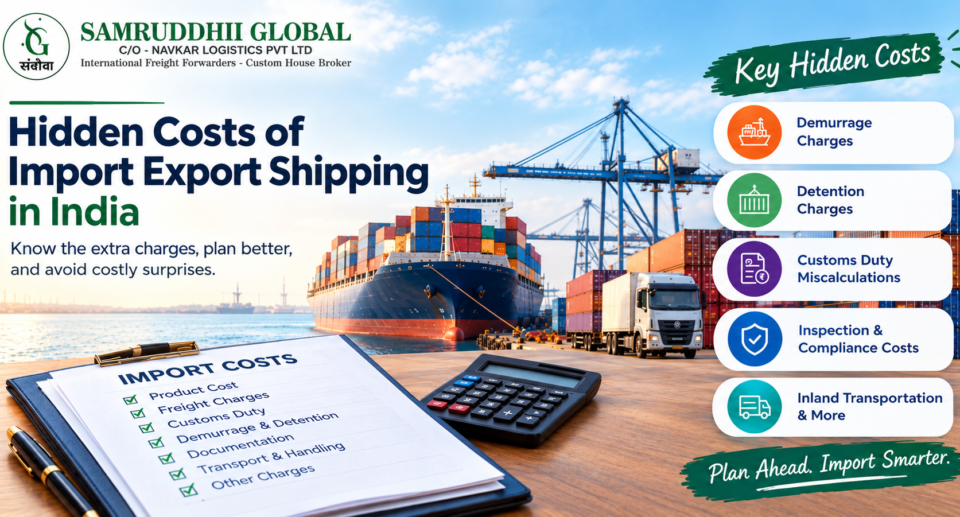
India’s import-export industry is growing rapidly in 2026, with increasing trade through major ports like JNPT customs clearance, Mundra Port, Chennai Port, and Mumbai Air Cargo Complex. While businesses calculate basic freight and duty expenses, many ignore hidden shipping charges that increase overall import export logistics costs.
Unexpected customs clearance charges, port delays, demurrage and detention charges, documentation errors, and rising freight forwarding costs can reduce profits and delay shipments. Many importers and exporters face financial losses due to poor logistics planning and compliance issues.
This guide explains the major hidden costs in international shipping and how professional customs clearance services and freight forwarding services help businesses reduce delays, avoid penalties, and control shipping expenses.
Understanding Import Export Logistics Costs
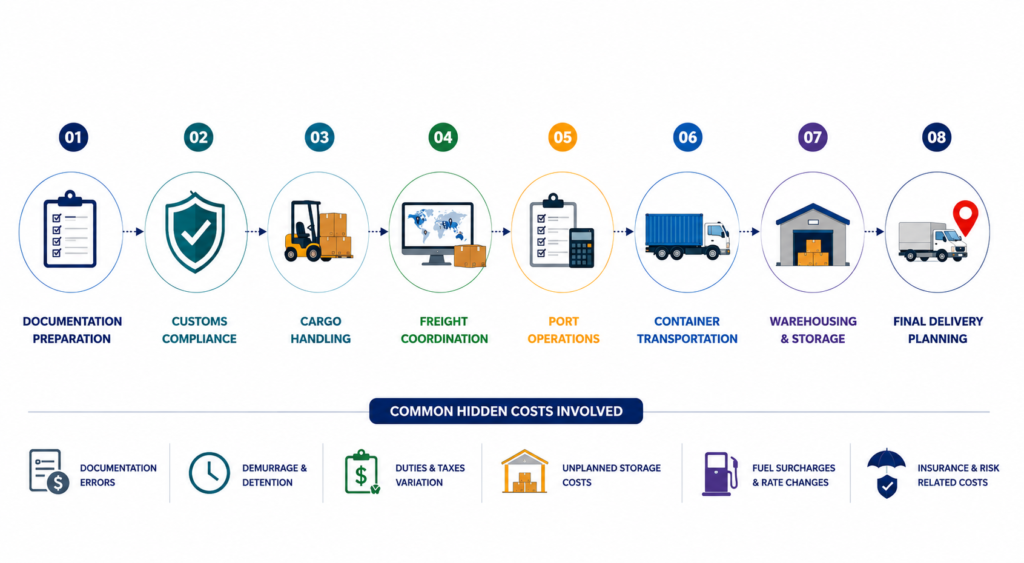
International shipping involves much more than moving cargo from one country to another. Every shipment passes through multiple operational stages before reaching the final destination.
These stages include:
- Documentation preparation
- Customs compliance
- Cargo handling
- Freight coordination
- Port operations
- Container transportation
- Warehousing and storage
- Final delivery planning
If any part of this process experiences delays or compliance issues, businesses may face additional expenses that were not included in the original shipping budget.
Common hidden costs include:
- Customs clearance charges
- Demurrage and detention charges
- Freight forwarding costs
- Port handling fees
- Cargo inspection expenses
- Documentation correction charges
- Container storage costs
- Transportation delays
These hidden shipping charges may initially appear manageable, but when combined across multiple shipments, they can significantly affect overall profitability.
Businesses operating through high-volume ports such as JNPT often experience these issues more frequently due to cargo congestion and complex customs procedures.
Customs Clearance Charges: A Major Hidden Expense
One of the most common hidden costs in international shipping is customs clearance charges. Many importers assume customs clearance only involves duty payment, but the actual process includes several operational and compliance-related expenses.
When cargo arrives in India, customs authorities verify shipment documents, assess import duties, inspect cargo if necessary, and confirm compliance before releasing the goods.
During this process, businesses may incur multiple additional charges such as:
- Documentation filing fees
- Customs broker service charges
- Cargo examination expenses
- Port handling charges
- Compliance verification fees
- Duty assessment support charges
- Delivery order processing fees
Even a small documentation mistake can increase customs clearance time and create additional expenses.
For example, if an importer uses an incorrect HS code or submits incomplete shipping documents, customs officials may place the cargo on hold for further verification. This delay increases storage costs, container charges, and transportation disruptions.
Professional customs clearance services help businesses avoid these issues by ensuring proper documentation and compliance before cargo arrival.
Demurrage and Detention Charges Can Increase Quickly
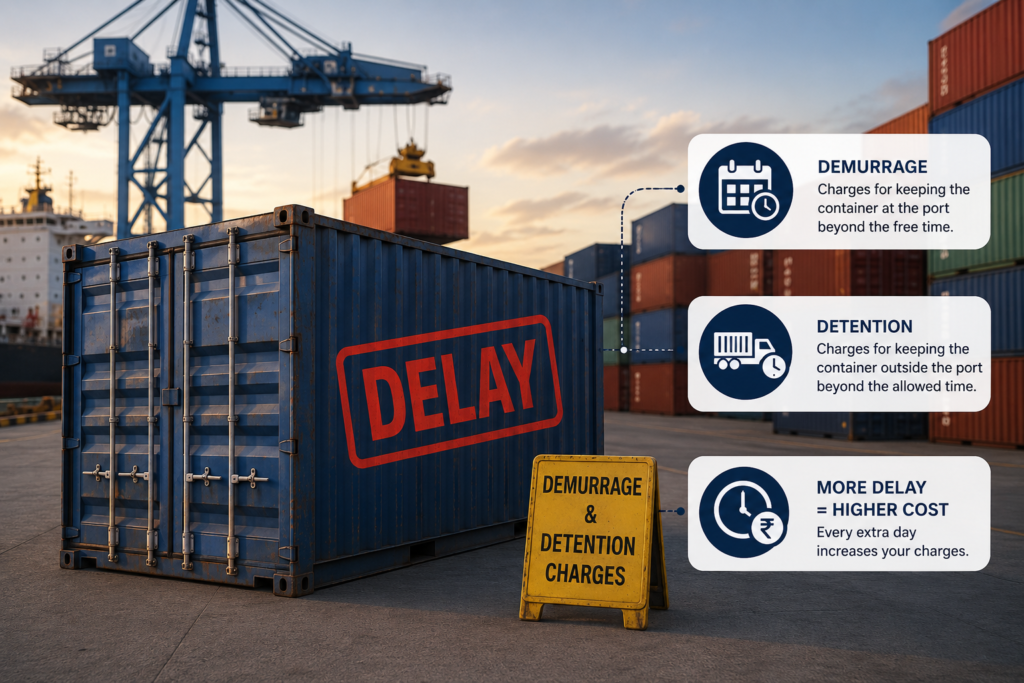
Demurrage and detention charges are among the most expensive hidden shipping charges faced by importers and exporters in India.
Many businesses do not fully understand these charges until they receive large invoices from shipping lines or terminal operators.
What Are Demurrage Charges?
Demurrage charges apply when cargo remains inside the port or terminal beyond the free storage period allowed by the shipping line or terminal authority.
For example, if cargo arriving at JNPT customs clearance operations is not completed within the permitted free days, daily demurrage charges begin accumulating.
What Are Detention Charges?
Detention charges occur when the importer takes the container outside the port but fails to return the empty container within the allowed timeframe.
Shipping companies impose these charges because delayed container returns affect container availability and shipping schedules.
Why These Charges Become Expensive
Several operational issues can increase demurrage and detention charges, including:
- Delayed customs clearance
- Incorrect shipment documentation
- Port congestion
- Transportation coordination issues
- Delayed duty payments
- Cargo inspection delays
In some situations, businesses may pay thousands of rupees per container every day due to shipment delays.
Reliable freight forwarding services help businesses reduce these risks through better shipment planning and container management.
Freight Forwarding Costs Often Fluctuate
Many businesses assume freight charges remain fixed throughout the shipping process. However, freight forwarding costs are highly dynamic and often change due to global market conditions.
International shipping rates are influenced by:
- Fuel price fluctuations
- Seasonal shipping demand
- Container shortages
- Global trade disruptions
- Route congestion
- Currency fluctuations
As a result, businesses frequently face unexpected freight surcharges during cargo movement.
Common freight forwarding costs include:
- Ocean freight charges
- Air cargo surcharges
- Fuel adjustment charges
- Peak season surcharges
- Container imbalance fees
- Inland transportation expenses
Without proper planning, these costs can significantly increase overall shipping expenses and reduce business profitability.
Professional freight forwarding services help businesses optimize cargo movement, improve route planning, and reduce unnecessary transportation expenses.
Hidden Shipping Charges at Indian Ports
Indian ports involve several operational charges that businesses often ignore while planning shipment budgets.
These hidden shipping charges can become expensive when cargo clearance gets delayed.
Common port-related charges include:
- Terminal Handling Charges (THC)
- Container scanning fees
- Seal verification charges
- Ground rent charges
- Container Freight Station (CFS) fees
- Port storage charges
- Weighment charges
At high-volume ports such as JNPT, even small delays can significantly increase these expenses.
For example, if a shipment is selected for customs examination and remains at the port for additional days, businesses may continue paying storage fees and container-related charges until cargo release.
Proper shipment coordination and timely customs processing are essential for reducing unnecessary port expenses.
Documentation Errors Create Major Logistics Problems
Documentation mistakes are one of the biggest reasons for shipment delays and rising import export logistics costs in India.
Even minor errors can create serious customs complications.
Common documentation mistakes include:
- Incorrect HS code classification
- Invoice mismatch
- Wrong product descriptions
- Missing licenses or certificates
- Packing list discrepancies
- Bill of lading errors
These mistakes can result in:
- Cargo examination
- Delayed shipment release
- Customs penalties
- Higher storage charges
- Increased customs clearance charges
For example, if customs officials identify differences between the invoice and packing list, they may stop cargo clearance until additional clarification is provided.
Businesses using professional customs clearance services reduce the risk of these operational disruptions because experienced professionals verify all documents before filing.
Cargo Inspection and Examination Costs
Indian customs authorities may physically inspect shipments based on product category, compliance concerns, or risk assessment.
Although inspections are a routine part of international trade, they often create additional expenses.
Additional costs during cargo inspection may include:
- Labor charges
- Container handling fees
- Cargo unpacking and repacking costs
- Storage charges
- Delayed transportation expenses
In some cases, customs authorities may also request laboratory testing or product certification, increasing shipment costs further.
Improper documentation and incorrect declarations often increase the chances of cargo inspection.
JNPT Customs Clearance Challenges
JNPT customs clearance is one of the most important logistics processes for businesses importing goods into India.
As India’s busiest container port, JNPT handles massive cargo volumes every day. Due to this high traffic, operational delays and congestion are common.
Common reasons for JNPT customs clearance delays include:
- Incorrect shipment documentation
- Wrong HS code declaration
- Port congestion
- Delayed duty payments
- Customs examination holds
- Compliance verification issues
Even short delays at JNPT can significantly increase import export logistics costs through additional storage fees and container penalties.
Businesses handling regular imports through Mumbai often depend on experienced customs clearance services for efficient cargo movement and compliance management.
How Hidden Costs Affect Real Businesses
Hidden logistics expenses do not only increase shipping costs. They also affect overall business performance and long-term growth.
Reduced Profit Margins
Unexpected logistics charges reduce the profitability of imported and exported goods.
Delayed Customer Deliveries
Late shipments damage customer trust and negatively affect future business opportunities.
Production Delays
Manufacturing businesses may face raw material shortages if imported cargo gets delayed.
Cash Flow Pressure
Rising logistics expenses can block working capital and create financial stress.
Loss of International Buyers
Global buyers expect timely deliveries and efficient shipping performance. Repeated delays can affect long-term business relationships.
How Businesses Can Reduce Hidden Shipping Costs
Reducing hidden logistics expenses requires accurate planning, efficient coordination, and professional logistics support.
Work With Professional Customs Clearance Services
Experienced customs professionals help businesses:
- Avoid documentation errors
- Improve compliance accuracy
- Speed up customs processing
- Reduce shipment delays
Choose Reliable Freight Forwarding Services
Professional freight forwarders help businesses:
- Optimize shipping routes
- Reduce transportation risks
- Improve shipment coordination
- Control freight forwarding costs
Verify Documentation Carefully
Invoices, packing lists, licenses, and HS codes should always be verified before shipment arrival.
Monitor Cargo Regularly
Real-time shipment tracking helps businesses avoid unnecessary storage and detention charges.
Understand Port Free Days
Importers should carefully monitor container deadlines to reduce demurrage and detention charges.
Improve Coordination Between Logistics Teams
Better communication between suppliers, transporters, customs teams, and freight forwarders reduces operational confusion and shipment delays.
Why Professional Logistics Support Matters in 2026
The import-export industry has become more compliance-focused and operationally demanding in 2026. Businesses can no longer rely on incomplete documentation or manual shipment coordination.
Professional customs clearance services and freight forwarding services provide businesses with:
- Faster customs processing
- Improved shipment visibility
- Better compliance management
- Reduced operational risks
- Lower logistics expenses
- Efficient cargo movement
Businesses importing through major ports such as JNPT especially benefit from experienced logistics support because of the complexity of port operations and customs procedures.
Conclusion
The hidden costs of import export shipping in India can significantly affect business profitability if not managed properly. Expenses such as customs clearance charges, demurrage and detention charges, freight forwarding costs, hidden shipping charges, and documentation errors often create unexpected financial pressure for importers and exporters.
Many businesses focus only on visible shipping expenses while ignoring the operational and compliance-related costs involved in international logistics.
Understanding complete import export logistics costs is essential for businesses that want to improve operational efficiency, reduce shipment delays, and maintain strong profit margins.
By working with experienced customs clearance services and reliable freight forwarding services, businesses can minimize delays, improve compliance, and ensure smoother cargo movement through JNPT customs clearance operations and other major Indian ports.
As global trade continues to evolve in 2026, businesses that invest in efficient logistics planning and professional shipping support will gain a strong competitive advantage in the international market.